The Matrix
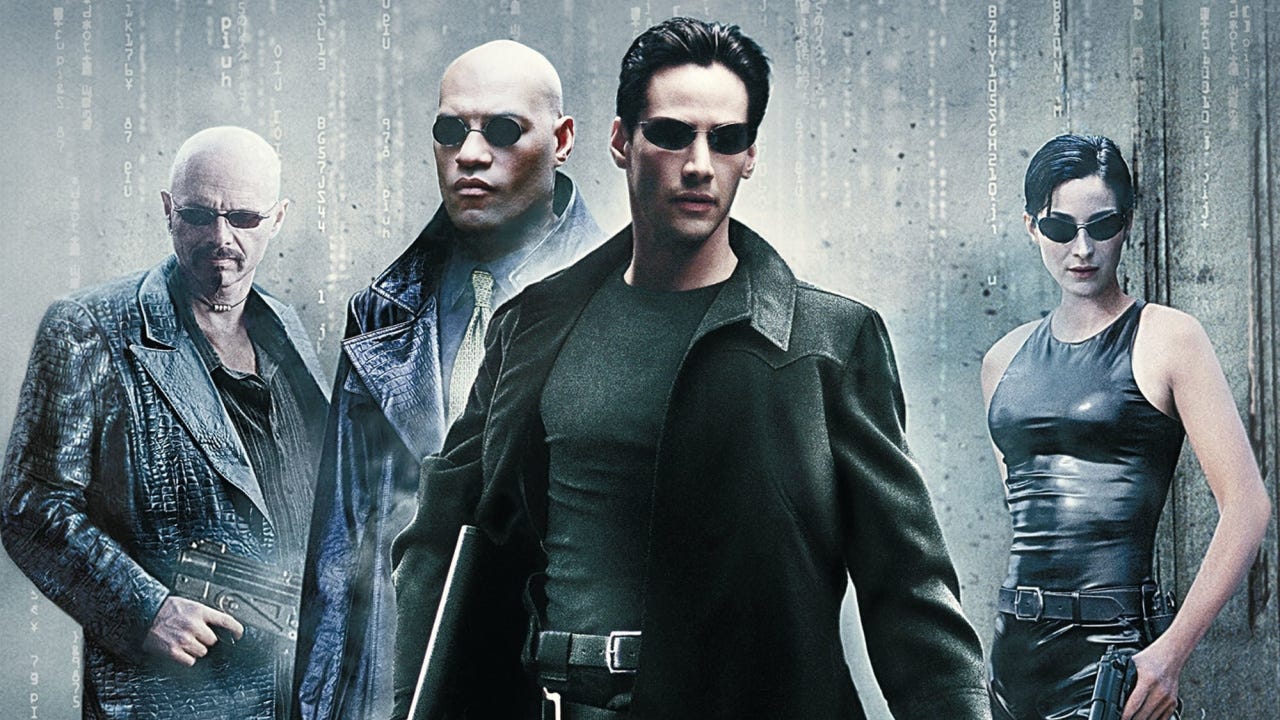
This post will be updated as I finish watching each installment
In the vast realm of cinematic experiences, few films have managed to transcend mere entertainment to become iconic cultural touchstones. Enter “The Matrix” trilogy, a mind-bending blend of philosophy, action, and futuristic cool that continues to captivate audiences long after its initial release.
Answer to the Hangman Puzzle click here
I have just had the pleasure of watching this masterpiece and I have to say right off the bat, it does not leave any aspect unturned.
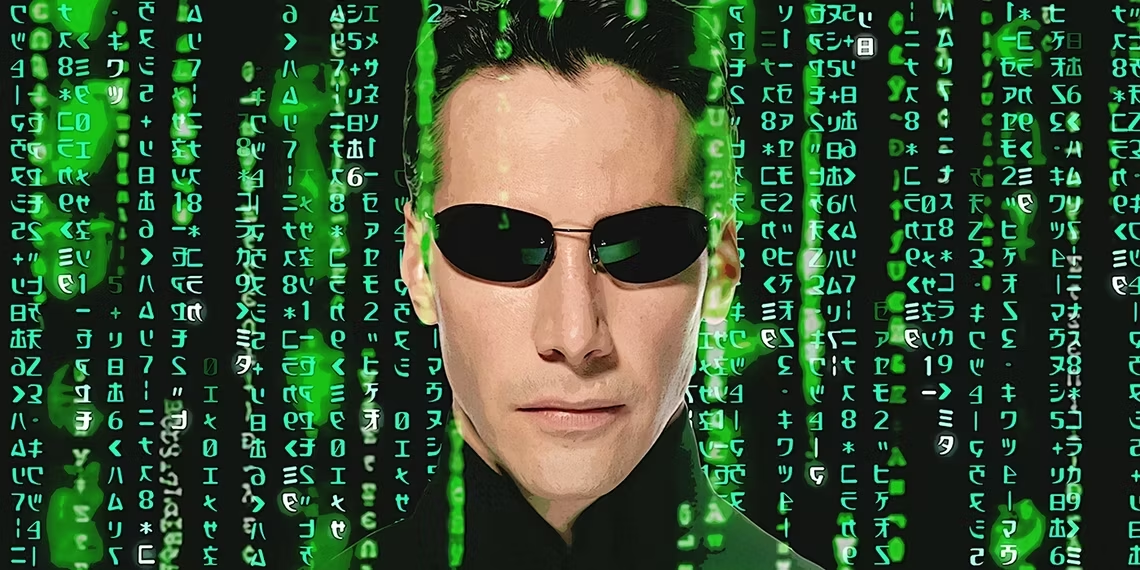
Released in 1999, “The Matrix” burst onto the scene with revolutionary visual effects, innovative storytelling, and a healthy dose of existential pondering. Directed by the Wachowskis, this cyberpunk masterpiece follows the journey of Neo, a computer hacker turned savior of humanity, as he navigates a dystopian world ruled by sentient machines.
What makes “The Matrix” so enduringly captivating is its seamless fusion of high-octane action sequences with profound philosophical themes. From the iconic bullet-dodging scenes to the mind-bending reality-bending concept of the Matrix itself, this film had me questioning the nature of reality and the boundaries of human perception, haha.
But it’s not just the jaw-dropping it’s the concepts like free will versus determinism, the nature of consciousness, and the quest for enlightenment, where you fully are aware that you are not your mind or your body are all explored within the film’s sleek cyberpunk aesthetic.
Check out my first time reaction to The Matrix first installment here:
And then there’s the iconic performance of Keanu Reeves as Neo, the reluctant hero whose journey from disillusioned hacker to enlightened messiah is as compelling as it is timeless. Reeves’ stoic yet soulful portrayal of Neo has earned him a place in the pantheon of pop culture icons, solidifying his status in my heart for one, and as one of Hollywood’s most beloved leading men.
But perhaps what resonates most deeply about “The Matrix” for me is its timeless message of empowerment and self-discovery. In a world where technology increasingly blurs the line between illusion and reality, the film serves as a reminder to question the narratives we’re fed and to seek truth and authenticity in our own lives.
Can’t wait to check out the rest! What did you think?
Answer to the Hang Man puzzle: Continental, this place is seen in Keanu Reeve’s film John Wick.
The Matrix Reloaded
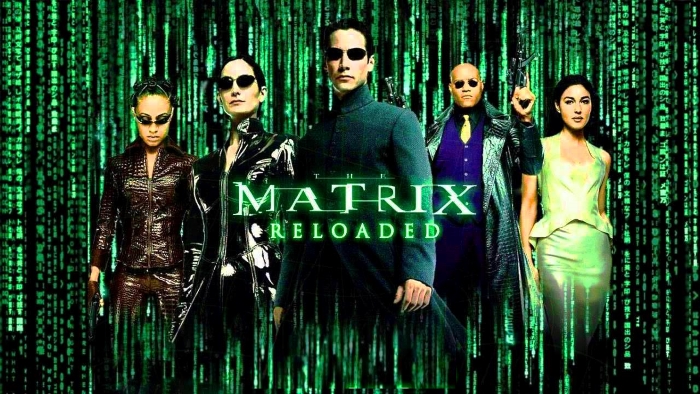
I just watched The Matrix Reloaded, and it’s still a mesmerizing experience that combines high-octane action with deep philosophical musings. The film picks up where the original left off, diving deeper into the conflict between humans and machines. Neo, played by Keanu Reeves, continues to grapple with his role as “The One,” and the narrative introduces more complex questions about free will versus determinism.
One of the standout sequences is the freeway chase, a masterclass in action filmmaking. The choreography and special effects are spectacular, making it one of the most memorable scenes in the series. Neo’s multi-Agent Smith battle is another highlight, pushing the boundaries of CGI at the time and delivering a visually stunning spectacle.
The film’s exploration of themes like choice, purpose, and control is both intriguing and dense. The Architect’s scene, in particular, is packed with philosophical dialogue that had me hitting pause to fully grasp the implications. While this can make the plot feel convoluted at times, it adds a layer of intellectual depth that sets the series apart from typical action fare.
The supporting cast, including Carrie-Anne Moss as Trinity and Laurence Fishburne as Morpheus, deliver strong performances that ground the film’s more abstract concepts. The introduction of new characters like the Merovingian and the Oracle’s new form adds fresh intrigue and complexity to the story.
Visually, The Matrix Reloaded is a treat. The Wachowskis push the envelope with innovative camera work and groundbreaking visual effects that still hold up today. The film’s aesthetic, blending sleek cyberpunk elements with gritty realism, creates an immersive atmosphere that’s both unique and captivating.
In summary, The Matrix Reloaded is an ambitious sequel that expands the universe and challenges the audience with its intricate plot and profound themes. Despite its occasional narrative density, it remains an exhilarating and thought-provoking film that continues to resonate long after the credits roll.
Check out my reaction to this film here:
Let’s delve further into the infamous conversation between Neo and the Architect.
The scene between the Architect and Neo in The Matrix Reloaded is one of the most pivotal and complex moments in the film, packed with philosophical and plot-relevant revelations. Here’s a breakdown of what happens and its significance:
Setting the Scene
Neo enters a pristine, white room filled with multiple screens displaying his own image. At the center of this room is the Architect, an older man in a white suit who reveals himself as the creator of the Matrix.
Key Points of the Conversation
- Introduction of the Architect:
The Architect explains that he designed the Matrix and oversees its functioning. He is a highly logical and emotionless figure, in stark contrast to Neo’s passionate quest for freedom. He is also trying to trigger Neo and play a bit with his emotions as he may feel a bit envious to the fact that he doesn’t posses them. - History of the Matrix:
The Architect reveals that the current Matrix is not the first iteration. In fact, it is the sixth version. Previous versions were imperfect and led to disastrous results. To address these issues, the Architect and the Oracle (a program designed to understand human psychology) created a version of the Matrix that incorporated choice, albeit at a subconscious level. - The Concept of Anomalies:
Neo learns that he is an anomaly, a systemic error that occurs in each iteration of the Matrix due to the inherent unpredictability of human choice. These anomalies are inevitable but manageable. - The Purpose of the One:
Each iteration of the Matrix includes “The One,” a person who possesses extraordinary abilities and serves as a temporary solution to the anomaly problem. The One’s role is to eventually reach the Source, where they must make a crucial choice to reboot the Matrix and prevent its total collapse. - The Choice:
The Architect presents Neo with two doors. One leads to the Source, where Neo can choose to reboot the Matrix, which will save humanity within the Matrix but at the cost of Zion (the human city) being destroyed and subsequently rebuilt in the real world. The other door leads back to the Matrix, where he can attempt to save Trinity, who is in mortal danger. - Neo’s Decision:
Unlike his predecessors, Neo chooses the second option, prioritizing his love for Trinity over the logical choice of rebooting the Matrix, as if he reboots it, he could potentially lose this version of Trinity. This decision sets him apart from the previous iterations of the One and introduces a new, unpredictable element into the cycle.
Significance of the Scene
- Philosophical Themes:
The scene delves deep into themes of determinism versus free will, control versus chaos, and the power of choice and having hope. It highlights the conflict between the cold, calculated logic of the machines and the emotional, unpredictable nature of humans whom to hold a weakness yet a great strength in their quality of having HOPE. - Plot Implications:
Neo’s choice to save Trinity rather than reboot the Matrix fundamentally alters the expected cycle, setting the stage for the final film, The Matrix Revolutions. It underscores Neo’s unique nature and foreshadows a possible end to the repetitive cycle of destruction and rebirth that has plagued both the Matrix and Zion. The machines and humans form a paradox where both need each other but are trying to destroy each other. - Character Development:
Neo’s decision emphasizes his humanity and his deep connection to Trinity, reinforcing the series’ underlying message about the power of love and human connection.
This scene is crucial because it reveals the cyclical nature of the Matrix, the preordained roles within it, and sets up the narrative for breaking free from this cycle, ultimately aiming for a true resolution to the conflict between humans and machines.